


There is an urgent need today for a comprehensive collective dialogue, as it is the norm of progress and reform in the service of the public good, which is defined through a social discourse that expresses the concerns and needs of all people. Serious institutional dialogue comes about by reaching out to people, living their conditions, working with them, and knowing their needs, for the true inspirers are those who inspire others, leading to the achievement of actual accomplishment.
Improving the living conditions of the human being is a weighty necessity for achieving sustainable development, just as the best investment of human resources constitutes an added value, given that human capital is the most important thing Jordan possesses, with the need to focus on the youth and women categories in society, through creating a cooperative formula closely related between the public and private sectors. Here I emphasise the importance of empowering youth for the present and the future, and the talk here is not limited to the educational aspect and market considerations only, but includes the importance of understanding talents and rising to the level of confidence that the broad base of the job pyramid does not always end in the so-called job elites, but does not end with the job as a destination in itself, but ends with effective citizenship.
By tracing the history of the Jordanian state, no period of my memory has passed without Jordan facing economic hardship; and the scene does not reconcile in my mind between the large demographic figures on the one hand and the financial hardship on the other. Jordan does not produce sufficient wealth to sustain the current economic pattern, as perhaps more than 40% of working Jordanians depend on government salaries, and at a time when we aspire to stop borrowing and relying on others, we find that reality goes otherwise.
These days we recall the passage of 51 years since the memory of the June 1967 war, and the devastation it left behind that still casts its shadows on the region in general and on the Jordanian state in particular in all fields to this day. Wars and conflicts in the region continue to negatively affect Jordan, which has today become a host to numbers exceeding its absorptive capacity, as its population has exceeded 10 million people, an increase exceeding 87% since the early nineties.
Thus, the most prominent challenge in the economic field is how to reconcile the large official figures on the number of residents in Jordan, citizens and refugees, as the number of Syrian refugees in Jordan until the beginning of March 2018 reached about 1.3 million people, to whom refugees of various nationalities are added with high numbers that constitute a major challenge to the Jordanian economy and the state’s public debt. This has contributed to negatively affecting the ability of the Jordanian state to improve the level of public service and manage the basic national facilities in the state.
Here the urgent need emerges to improve national capabilities to attract investment, as we have recently witnessed the flight of capital for reasons attributed to some national policies and legislation that express difficulty in foreseeing the future.
I see that the society of competence is our only hope to occupy the natural place among nations, and here I am not talking about competitive position, but about honesty with oneself. If our starting points are moral and sound, why should the endings not also be sound in focusing on the proper formation of youth and empowerment and legal delegation to them in order to prepare future national cadres and leaders capable of carrying out the expected and effective roles in public life, and this is done through developing a knowledge economy of weight based on attention to and sponsorship of education in the public sector and raising the level of higher education institutions to the ranks of advanced universities and institutes.
One cannot talk about community development and overcoming economic obstacles without referring to the importance of policy dialogue between the parties to the societal equation, on the basis of balancing the human right to a dignified life and meeting his daily living requirements and his duties towards the state on the basis of good citizenship. The past weeks have proven our urgent need to search for a means by which we address our major issues in the future, political, economic, social and humanitarian, and this requires tightening the methodology of policy dialogue, and making it an optimal method to which we resort whenever opinions differ among us and ideas branch out. We must discuss with the utmost rationality on the basis of rational criticism and maximising the public good.
Policy dialogue requires building accurate and agreed-upon information centres that become our reference. The current challenges facing us will only be resolved if we subject the policy alternatives related to them to independent, neutral research, analysis and study, and their results are presented to the different parties, and they become the unified reference among them to discuss their points of view.
The culture of policy dialogue and support for public policy in terms of its style, framework and means must be the sound approach to reaching societal consensus without giving precedence to emotions over the language of reason, and without neglecting the humanitarian aspects whose adherence reflects a high level of societal cohesion and solidarity.
At the internal level, the need emerges to review the social contract in a way that enhances the legal empowerment of the individual and protects his human dignity, alongside building an effective partnership between the public and private sectors and the true civil current therein that maximises and serves the public good. Jordan today faces conditions that are difficult, to say the least, but I am fully confident that it is capable of overcoming them through the ability and awareness of its citizens, just as it was able to overcome and surpass previous crises.
At the regional level, the relationship with friendly countries must be based on mutual respect and maximising creative commonalities through which the citizen realises that there is no country in the region that can supervise its water, energy and human environment programmes alone.
In conclusion, I say yes to Jordan’s present, and yes to its honourable past that is considered a prelude to the future.
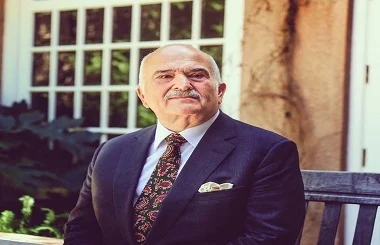
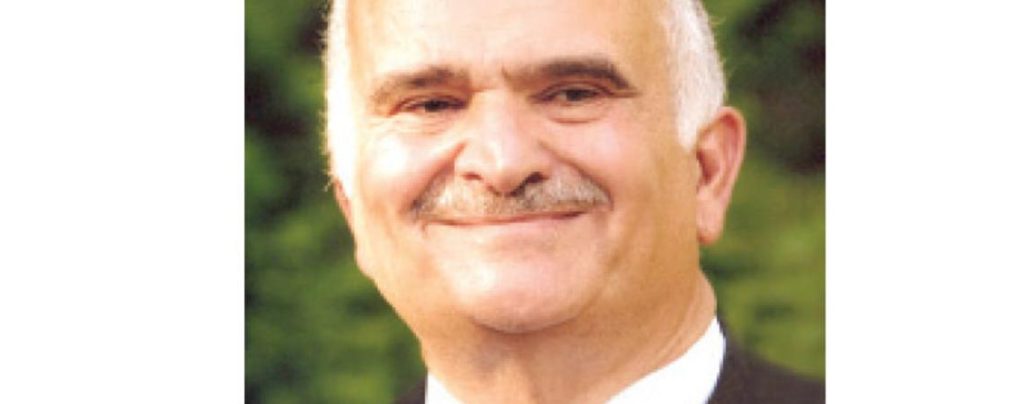
] El Hassan bin Talal